
What Is Slow Travel? A Meaningful Way to Experience Italy
Slow travel is an approach to travel that prioritises depth over speed. Instead of rushing through destinations, ticking off landmarks, or following tightly packed itineraries, slow travel focuses on staying longer, moving less, and engaging more deeply with local life. It values everyday experiences as much as headline sights, allowing travellers to build a genuine connection with a place.


When people ask what is slow travel, the simplest answer is this: it is travel shaped by time, presence, and curiosity. It encourages taking your time, eating what is local and seasonal, and adjusting your rhythm to that of the destination rather than the other way around.
In some parts of Italy, slow travel feels particularly natural. Small towns, local markets, family-run businesses, and strong regional identities create an environment where slowing down is not a compromise, but the point.
Slow Tourism: Travelling With Intention
Slow tourism extends the principles of slow travel into a broader mindset. It is not only about how you travel, but about the impact your travel has. Choosing locally owned accommodation, eating in traditional restaurants, visiting lesser-known areas, and travelling outside peak seasons all support communities while offering a more authentic experience.


Rather than concentrating visitors in a few overexposed destinations, slow tourism redistributes travel across rural areas and smaller towns. This makes regions with a strong everyday identity especially appealing, and this is where Le Marche stands out.
Slow Food and the Connection to Place
No discussion of slow travel is complete without slow food. Born in Italy, the slow food philosophy celebrates local ingredients, traditional recipes, and food cultures rooted in landscape and seasonality.
In Le Marche, slow food is not a trend; it is everyday life. Inland hills produce olive oil, legumes, truffles, and wines, while the Adriatic coast supplies fresh fish sold directly through small harbours and local markets. Menus change with the seasons, and many dishes are tied to specific villages rather than the region as a whole.


Participating in slow food while travelling can be as simple as:
- Shopping at weekly town markets
- Eating where locals eat rather than following online rankings
- Staying at agriturismi that cook with their own produce
- Taking time to learn the story behind a dish or ingredient
Food becomes part of the journey, not just a pause between activities.
Why Le Marche Is Ideal for Slow Travel
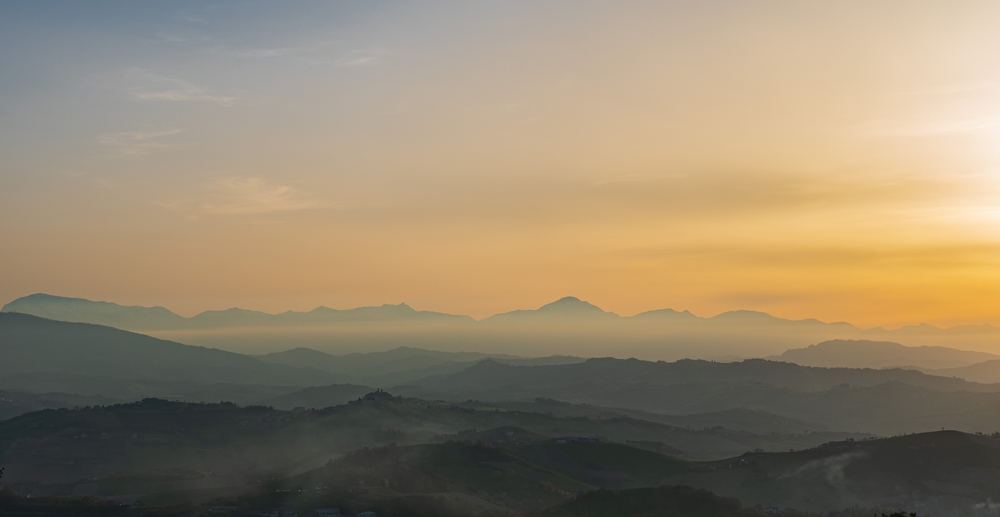
Le Marche offers the conditions that slow travellers actively seek, often without having to look for them. The region is largely rural, with hundreds of small towns spread between the Apennines and the Adriatic Sea. Distances are short, but contrasts are strong — mountains, countryside, and coast can all be reached without long transfers.


Unlike more crowded regions of Italy, Le Marche still operates on local rhythms. Shops close for lunch, festivals are organised for residents rather than tourists, and many villages remain untouched by mass tourism. This makes it easy to travel slowly without feeling disconnected or isolated.
Slow travel in Le Marche is supported by:
- Compact historic centres designed for walking
- Extensive countryside ideal for short hikes and scenic drives
- Small, family-run accommodation rather than large resorts
- A calendar shaped by agricultural cycles and local events
How to Practise Slow Travel in Le Marche
Slow travel does not require a strict plan. In Le Marche, it often happens naturally if you allow space in your itinerary. Practical ways to embrace it include:
1. Stay Longer in Fewer Places
Choose one base — a hill town, a rural farmhouse, or a small coastal village — and explore the surrounding area gradually. Many of the region’s most rewarding experiences happen within short driving distances.
2. Travel Outside Peak Season
Spring, autumn, and even winter are ideal for slow tourism in Le Marche. The pace is calmer, prices are lower, and everyday life is more visible once summer crowds fade.
3. Prioritise Local Experiences
Village walks, local festivals, small museums, and conversations with shop owners offer more insight than headline attractions alone. Slow travel is often about noticing details rather than seeking highlights.
4. Let Food Set the Schedule
Plan days around lunch markets, winery visits, or long dinners rather than attractions. In Le Marche, food provides a natural structure to the day.
Slow Travel as a Long-Term Choice
Slow travel is not about doing less — it is about experiencing more with intention. For travellers looking to understand Italy beyond its most famous destinations, Le Marche offers an environment where slow tourism, slow food, and everyday culture still align naturally.
It is a region where travelling slowly does not feel staged or curated, but simply appropriate. And for many visitors, that balance is exactly what turns a trip into a lasting memory.
For practical guides, village itineraries, and ideas on how to plan a slower journey through the region, visit our guides.
Exploring villages can be the first step where slow travel is treated as the norm, not a marketing label.
Comments are closed.